From the Pest Control Library
The Silent Spring Legacy
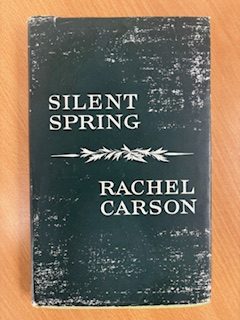
Part 1: Silent Spring
If you work in pest management and you have never read Silent Spring by Rachel Carson, you have almost certainly felt its impact anyway.
Published in 1962, it is probably the most influential book ever written about pesticides. Not a technical manual. Not a field guide. A story. And that was the point.
Carson was a marine biologist and gifted writer who became concerned about the widespread and largely unregulated use of synthetic pesticides, particularly DDT. She described a future town where birds no longer sang because pesticides had disrupted ecosystems. That image of a silent spring landed like a hammer blow.
Within a decade, the environmental movement had gathered serious momentum. In the United States the Environmental Protection Agency (EPA) was formed. DDT was eventually banned for agricultural use. The book also helped inspire the modern organic movement and a new way of thinking about chemicals in the environment. The precautionary principle, risk assessment, wildlife monitoring and environmental toxicology all grew in the soil Carson helped turn over.
Why should NPTA members care in 2026 ?
Because Silent Spring changed the public conversation about what we do.
Before Carson, pesticides were widely seen as symbols of progress. After Carson, they were also seen as potential threats. That shift still shapes legislation, product approvals, CRRU stewardship, COSHH assessments and the scrutiny our industry sits under today.
But here is where it becomes more nuanced.
Carson was right about persistence. DDT does bioaccumulate. It did thin bird eggshells. It did cause ecological harm when used indiscriminately. On that point, history largely supports her.
Where the debate becomes more complex is malaria control.
DDT was one of the most effective tools ever deployed against malaria carrying mosquitoes. Indoor residual spraying in parts of Africa, Asia and South America saved millions of lives. Even after agricultural bans, limited public health use continued under international agreements because in high risk areas the human benefit was undeniable.
Some critics argue that the backlash against DDT contributed to increased malaria deaths in certain regions. Others point out that resistance, funding gaps and political instability were also major factors. The truth sits somewhere in the middle. DDT was neither a miracle with no cost nor a villain with no benefit.
For today’s pest professional, that balance is the key lesson.
We now work in a far more regulated and evidence based environment. Products are scrutinised, authorisations are tighter, stewardship schemes exist and resistance management is front and centre. We talk about integrated pest management, monitoring, proofing, environmental impact and targeted application. In many ways, the modern UK pest controller is exactly what Carson was calling for. Informed, careful and accountable.
That does not mean we reject chemistry. It means we use it intelligently.
Silent Spring reminds us that public trust matters. If we lose it, regulation tightens. If we demonstrate professionalism, competence and proportionality, we maintain our place as essential public health practitioners.
Agree with Carson or not, she changed our industry.
And any book that can do that deserves at least one place on the pest controller’s bookshelf.