STADDLE STONES
By Hugh Radford, NPTA Vice Chair
Britain’s Early Defence Against Rats in Grain and Hay
Walk through almost any older rural village in southern England or even in garden center ornament departments and you may spot them.
Stone columns with wide, rounded tops, standing in neat rows, sometimes supporting a small timber building, on driveways or even left on their own like relics from another age. These are staddle stones, and for centuries they played a quiet but vital role in protecting British farms from rats.
Before rodenticides, before bait stations, before compliance audits and stewardship schemes, farmers relied on practical design to safeguard their livelihood. Staddle stones were one of the simplest and most effective tools they had.
A Practical Rural Innovation
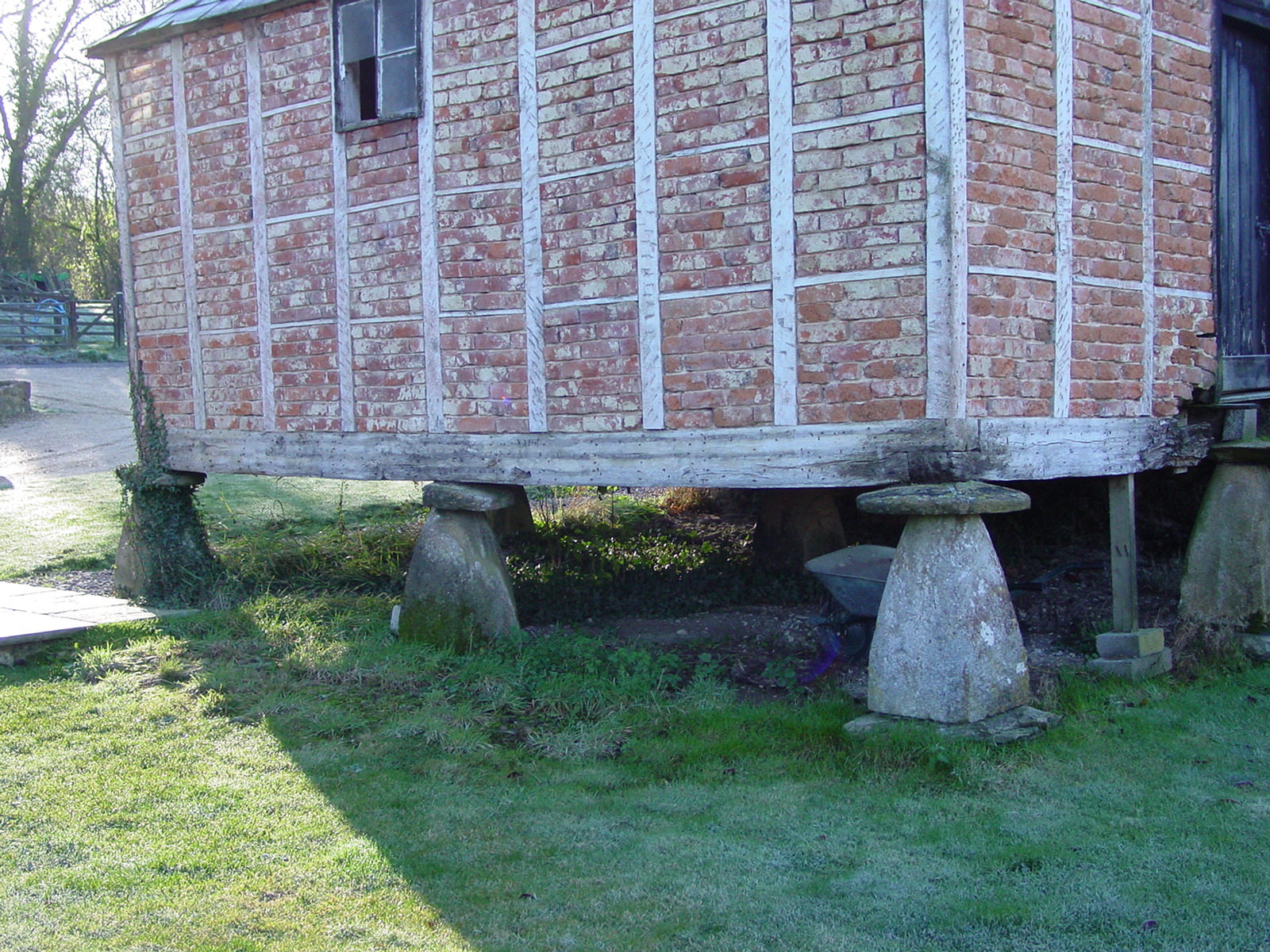
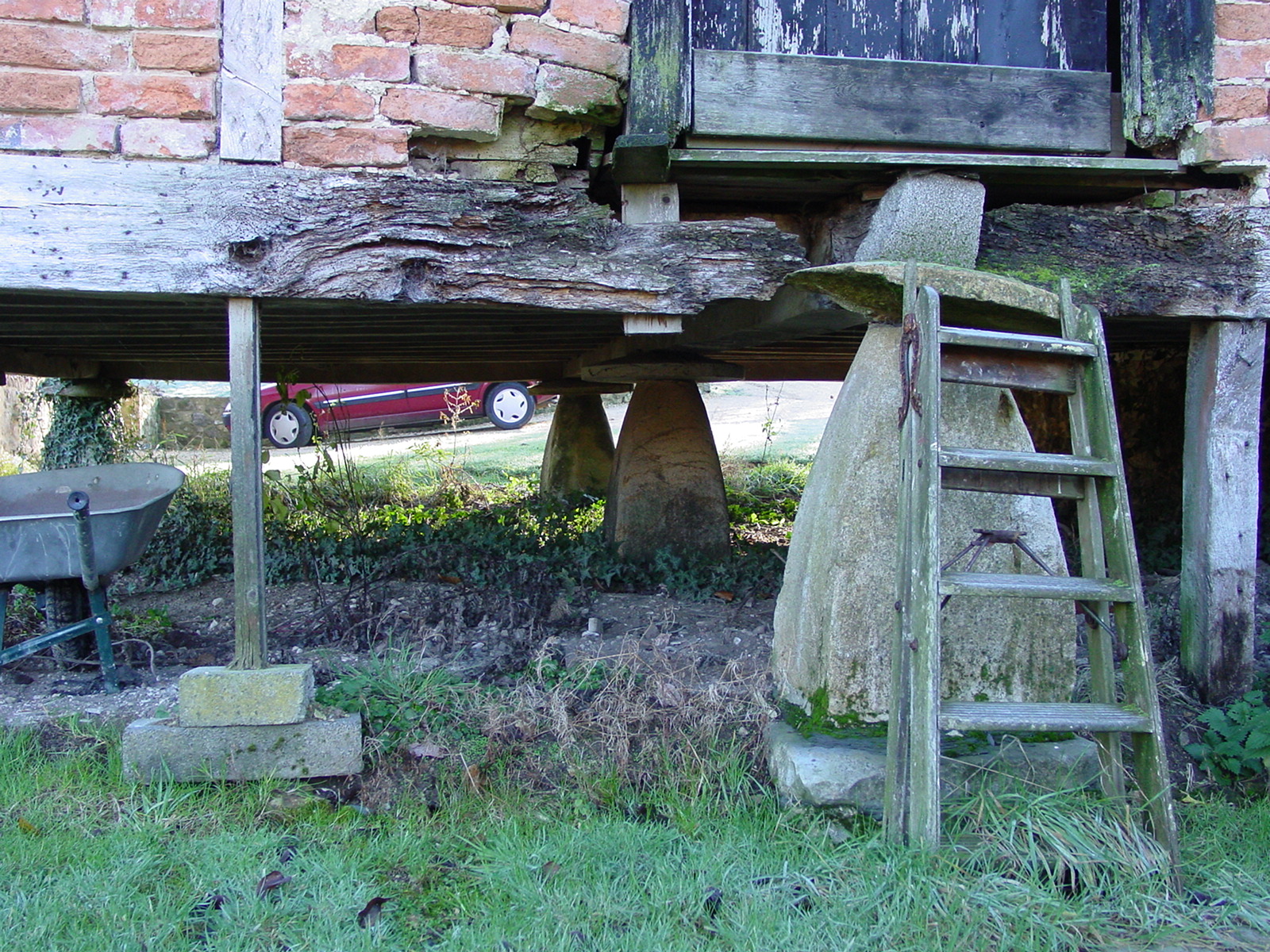
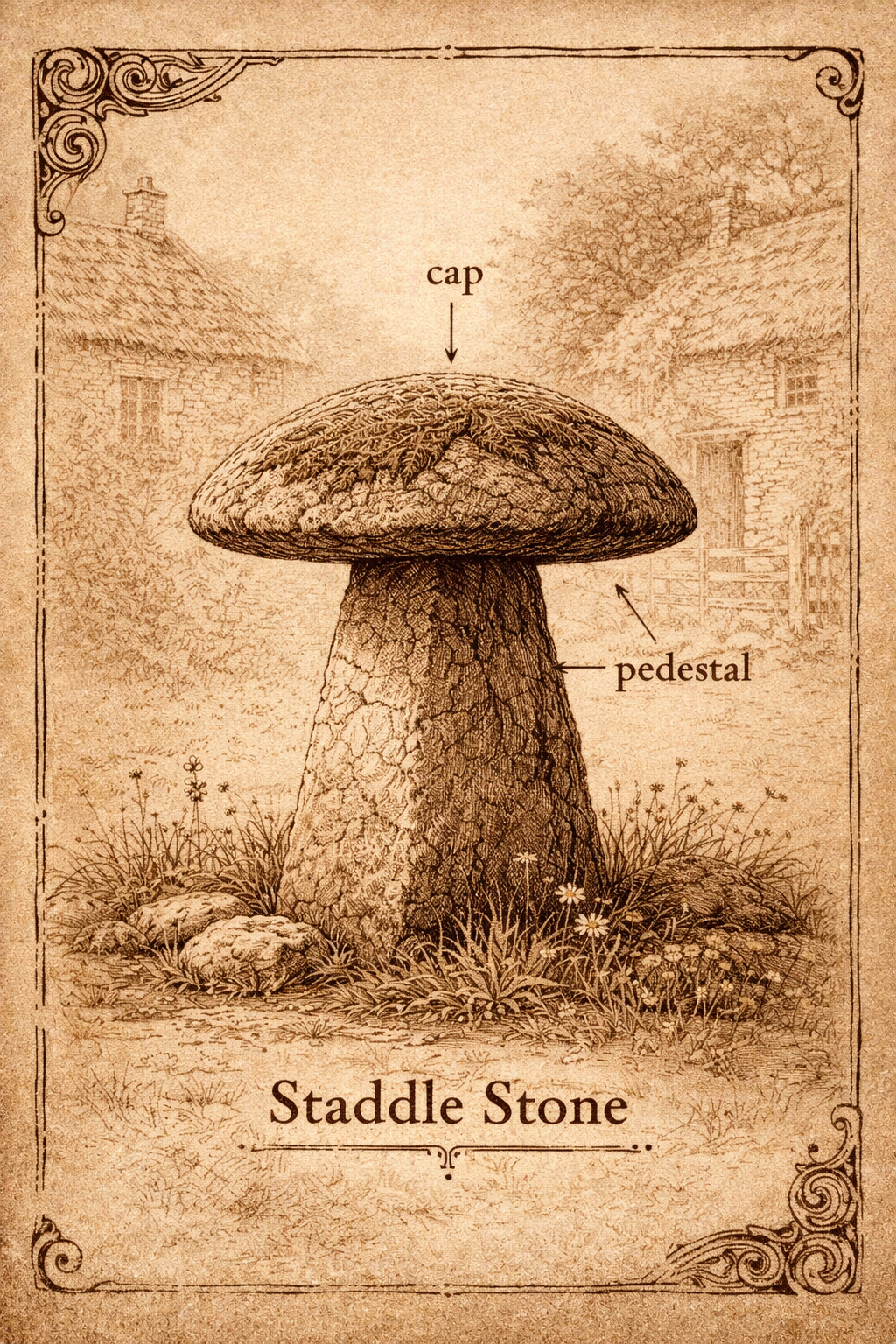
Staddle stones were widely used from the 17th to the 19th century, particularly across Hampshire, Wiltshire, Somerset and Kent. Typically carved from granite, sandstone or limestone, (Concrete in the garden centers) each stone consisted of a tapered pedestal topped with a projecting cap, often described as mushroom shaped.
That overhanging cap was not decorative. It was engineering.
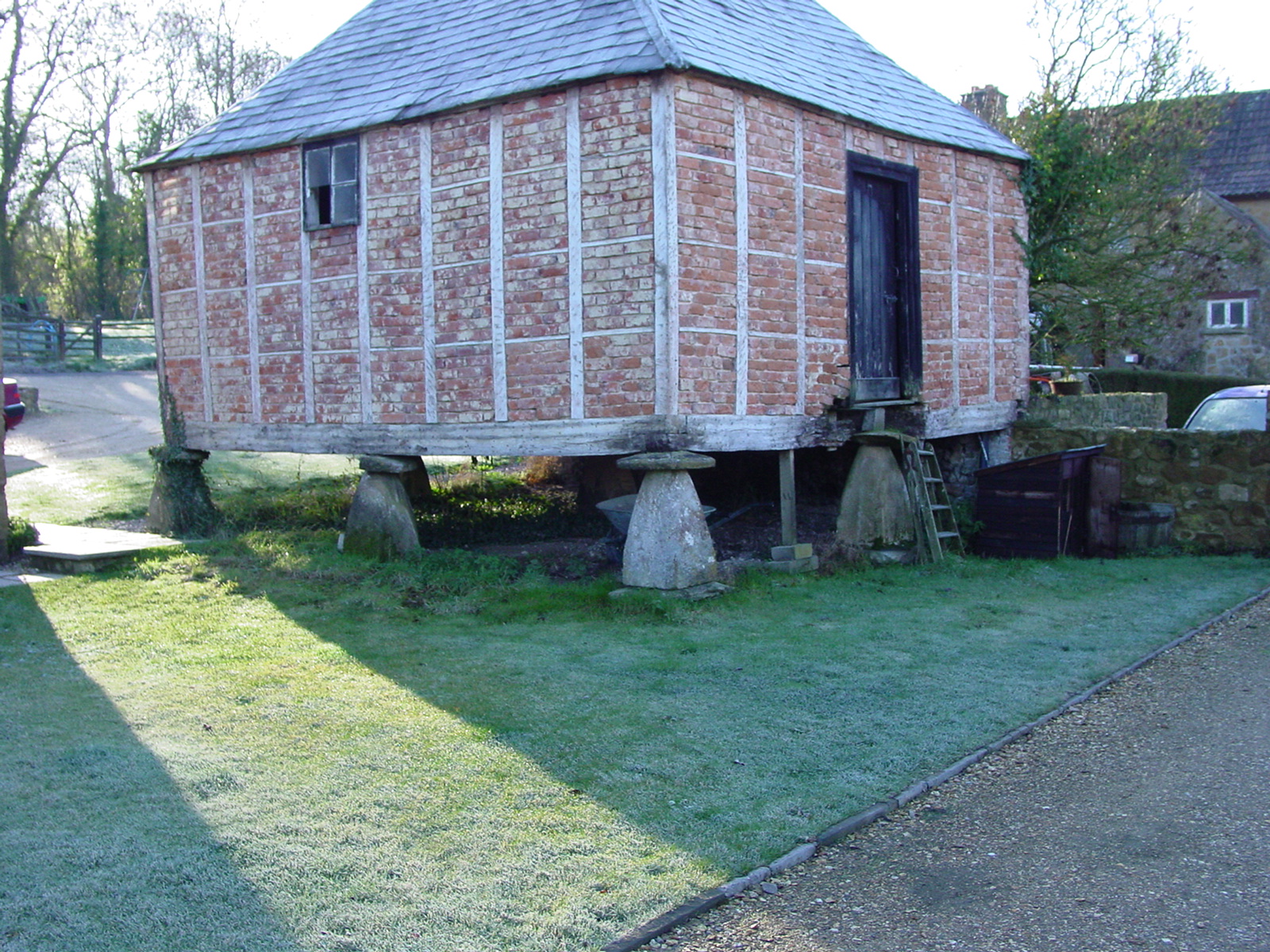
Granaries were built on top of a grid of these stones, usually six, nine or more depending on the building size. The timber frame of the granary rested directly on the stone caps, lifting the entire structure clear of the ground.
Hay and corn ricks were also raised on staddle stones, using a timber or iron platform. Again, the purpose was protection.
How They Helped Prevent Rats
The design achieved three key outcomes.
First, rodent deterrence. Rats as we know are capable climbers, but they rely on continuous surfaces and grip. The smooth stone pedestal was already a challenge. The projecting cap created an overhang that disrupted the climbing route, making access significantly more difficult. It was not completely rat proof, but it dramatically reduced easy entry.
Second, moisture control. Raising grain and hay above ground level allowed air to circulate beneath the structure. This reduced damp, preserved stored produce and limited conditions that attract pests.
Third, timber preservation. By preventing direct contact between wood and soil, staddle stones reduced rot and extended the life of farm buildings.
In modern terms , this was prevention through environmental control. Today we would call it proofing by design.
Why They Disappeared
As agriculture modernised, so did storage. Larger brick barns, mechanised handling, bulk silos and concrete floors gradually replaced small timber granaries. The practical need for staddle stones diminished.
Many surviving examples are now listed structures, valued as part of Britain’s agricultural heritage. Others have found second lives as garden features, gateposts or architectural curiosities.
Lessons for Today
For those working in pest management, staddle stones are more than historical interest. They are a reminder that effective pest control has always started with denying access (Exclusion) rather than reacting to infestation.
Long before formalised standards, farmers understood that good construction, airflow and separation from ground level were critical to protecting food stores. The principles remain unchanged. Remove harbourage. Break access routes. Control the environment. Exclusion and restriction before destruction.
There is something reassuring about that continuity. Two hundred years ago, a British farmer standing in a yard in Somerset was solving the same fundamental problem we face today. Keep the grain dry. Keep the rats out. Protect the livelihood.
The examples pictured are of a grain store situated near Chard in Somerset
All with a well shaped piece of stone and a bit of common sense.