LinkedInYouTube

Ants – Identification and Control


Overview

Ants are among the most common insect pests encountered in homes and businesses across the UK. These highly organised and social insects live in large colonies and are known for their relentless foraging behaviour, particularly when searching for food and water. While most ants found in the UK do not pose direct health risks, their presence can be a significant nuisance and is often regarded as unhygienic, especially when they invade kitchens, pantries, or food storage areas.

Once ants establish a trail to a reliable food source, they can quickly become difficult to control, as their colonies may number in the thousands. In addition to contaminating food, some ant species can cause minor property damage by dislodging soil or sand around paving and in walls. During warmer months, homeowners may notice the sudden appearance of flying ants, which are reproductive members of the colony emerging for their annual mating flights.

Prompt identification and effective ant control measures are crucial to prevent infestations from becoming established. Early action can help minimise the risk of ants spreading throughout your property and reduce the likelihood of needing more intensive professional intervention.


How to Identify Ants

Signs to Look For:

    • Trails of ants indoors, particularly in kitchens
    • Small piles of fine soil or sand near cracks and paving
    • Presence of flying ants during the summer
Common Ant Species in the UK

Pest Info Sheets - Feature images-04

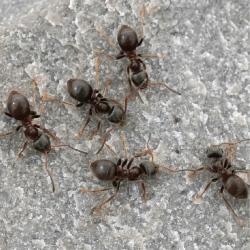
Black Garden Ant (Lasius niger)

Most common species, entering homes through gaps in search of sugary foods.

Pest Info Sheets - Feature images-03

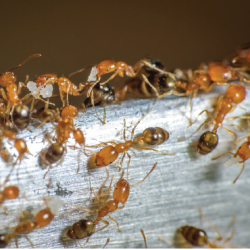
Pharaoh Ant (Monomorium pharaonis)

Found in heated buildings, hospitals, and blocks of flats. Requires professional control.

Risks and Impact

  • Contamination of food sources
  • Nuisance infestations that can grow quickly
  • Difficult to eliminate without treating the colony
  • Follow pheromone trails to food sources

Frequently Asked Questions

1. How do I get rid of ants in the house?

Remove food sources, wipe up pheromone trails with vinegar or scented oils, and use bait gels or insecticide treats. This is typically effective for most species.

2. What attracts ants into my home?

Ants seek sweet foods, grease, water, and shelter. Even tiny spills, pet food or moist conditions can lure them inside

3. Where do ants’ nest?

In the UK, ants often nest outdoors, in soil, under paving slabs, wall crevices, or garden beds. Indoor trails usually originate from these outdoor nests

4. Why are there suddenly so many ants?

On warm, humid days, especially between May and June, winged “flying ants” emerge to mate and start new colonies. Worker ant numbers increase afterward

5. Will ants go away on their own?

Not usually. Winter may reduce activity, but ants will return if a food source exists. Leaving trails untreated allows re-infestation

6. Will vinegar kill ants?

Vinegar is not lethal (unless ants drown) but disrupts their scent trails, reducing return visits.

7. How can I get rid of ants permanently?

Truly permanent removal is rare. Treating all active nests, sealing entry points, and maintaining good hygiene are essential. Professionals can help with colony-wide treatments.

8. Does having ants mean my home is dirty?

No, ants are opportunistic. Even clean homes can be targeted if there are crumbs, spills, or damp areas.

When To Call A Professional

  • Infestations persist despite DIY efforts.
  • When Pharaoh ants are identified as spraying can cause colony splitting and worsen infestation
  • Multiple nests exist or entry points aren’t clear.
  • Rapid or widespread infestation increases risk of food contamination or property issues.

Professional pest control technicians use colony-targeted baits, residual perimeter treatments, and expertise to locate all nests offering better chances for lasting control