Obituary – Paul Butt
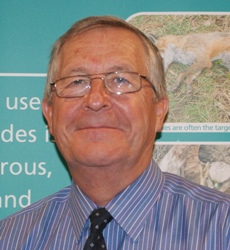
Photo credit: Pest magazine
It is with great sadness that we report on the death of our friend and colleague Paul Butt, who died in March. Many of you will have known him, as he was a distinguished and much respected trainer and adviser on matters involving conflicts with people, agriculture and wildlife. Here is a short life history condensed from PPC107, June 2022.
Paul joined MAFF (the Ministry of Agriculture, Fisheries & Food) in 1974 as a Field Officer, based in Maidstone, advising on vertebrate pest control and on storage and use of pesticides. Much of his time was spent investigating complaints and resolving conflicts with landowners and farmers regarding rabbit control.
His work also included providing training on a range of mammal and bird-related topics to local authority pest control departments.
For a while, he was seconded to the Pest Laboratory in Worplesdon in Surrey. The laboratory, supported by MAFF, was established to develop improved methods for preventing agricultural damage by mammals and birds. Paul was involved in studies on rabbit control and exclusion.
Then Paul moved to Oxfordshire where he worked on the wider issues of mammal and bird management. He helped develop policies and procedures for the wildlife teams, and provided guidance and training to advisers. He continued in this field when promoted to management in Norwich.
Finally, after 20 years away, he moved back to Kent, where he took on a new position at natural England, with responsibility for wildlife management work across Kent, Surrey, East and West Sussex. This role enabled Paul to develop cooperation between Natural England and the pest control industry.
His key role was dealing with mammal and bird-related conflicts, and licencing of otherwise illegal actions involving protected species. Projects included:
- badger damage and site development casework,
- the impact of fish-eating birds on commercial fisheries,
- the actual or potential involvement of wildlife in the transmission of disease to humans and livestock: including the Foot and Mouth Disease outbreak of 2001, where demand for the control of rats on affected farms resulted in a large-scale national programme; the impact of Avian Influenza on poultry enterprises, where rodent control was again required; the presence and spread of Salmonella in commercial egg production farms, where significant infestations of house mice were often present.
At this time concerns around anticoagulant residues in wildlife were increasing, and Paul was involved with CRRU along with rodenticide manufacturers, distributors, users and regulators, leading to the CRRU Code of Best Practice.
Major changes to the approvals, availability and use of a wide range of pesticides in all sectors played a major part of the work that Paul undertook, as education, awareness and, where necessary enforcement, played a significant part in encouraging responsible use. Paul was instrumental in the Wildlife Incident Investigation Scheme (WIIS) that investigated incidents involving the misuse and abuse of pesticides.
He developed working relationships with organisations and agencies such as the police, The RSPCA, and the RSPB. Paul believed that building relationships with action groups, industry bodies and individuals who often undertook work behind the scenes contributed significantly to advancing an understanding on sensitive and complicated issues. Feeding back information to DEFRA and others, and training and briefing of wildlife adviser groups, helped considerably in achieving a better understanding of respective interests and responsibilities.
Whilst Paul busied himself with his own job, he was often invited to industry conferences, breakfast meetings and on events similar to our On The Road Days as a speaker, and as such became a ‘regular’ and got to know those involved in the pest control industry well. Paul closed the gap between government bodies such as DEFRA (Natural England) and the HSE with those in the industry using his ‘show and tell’ presentations of illegal practices without the need for the ‘name and blame’ culture often feared by those sailing a bit too close to the line. As a result, Paul gained a huge respect in the industry, always approachable for a chat no matter the situation. He will be sadly missed.