From The Pest Control Library
The Language of Buildings
Understanding the structures we work on every day
By Matthew Rice
(Created by Hugh Radford)
“The better we understand buildings, the better we understand the pests that live on, in and around them.”
Not every essential pest control book is about pests.
One of the great pleasures of building a professional library is discovering books that, at first glance, appear to have nothing whatsoever to do with pest management. Matthew Rice’s The Language of Buildings is one of those books.
It isn’t about rodents, insects or birds. There are no treatment programmes, pesticide recommendations or identification keys. Instead, it teaches something every pest professional works with every day but rarely studies properly buildings.
Whether you’re carrying out a proofing survey, inspecting for pigeons, locating rodent entry points or discussing remedial work with a contractor, understanding how buildings are put together is an invaluable skill. This beautifully illustrated guide gives names to the architectural features we often point at but struggle to describe accurately. Do you want to know the difference between a Tympanum and a Doric Greek column.
What’s in the book?
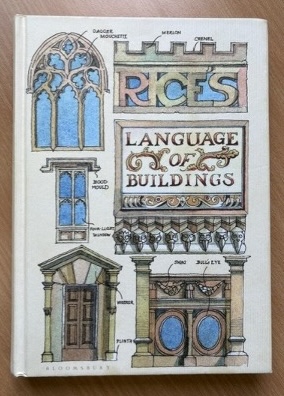
Matthew Rice has created an illustrated guide to the language of architecture, explaining hundreds of features found on buildings from different periods and styles.
From cornices, pediments and parapets to dormers, mullions, lintels and string courses, every page helps the reader understand the terminology used by architects, surveyors, planners and conservation specialists.
Rather than being a technical textbook, it is an accessible and enjoyable guide filled with hand drawn illustrations that make even complex architectural terms easy to understand.
Why does this matter to pest controllers?
Good pest management is about far more than identifying pests.
Much of our work involves understanding how pests interact with buildings. A successful proofing recommendation often depends on accurately describing where work needs to be carried out.
Saying a bird net needs fixing “above the window” may be enough for some jobs, but being able to identify a parapet, cornice, soffit, fascia or string course makes communication with contractors and clients much clearer.
If you were surveying an old building, instead of writing:
“Install bird proofing around the fancy pillars.”
you could write:
“Install discreet bird proofing to the Corinthian capitals and adjacent cornice.”
The same applies when preparing reports, discussing remedial works with facilities managers or working on listed buildings where architectural terminology is commonly used.
For anyone involved in bird proofing, in particular, this knowledge can prove invaluable. Knowing the correct names for the parts of a building allows surveys and quotations to be more precise and gives greater confidence when discussing solutions with customers.
A book that changes the way you look up
One of the unexpected pleasures of this book is that it changes how you see the world around you.
After reading it, you find yourself walking through towns and cities looking upwards rather than straight ahead. Features that once blended into the background suddenly become recognisable.
A decorative pediment, a projecting cornice or a carefully designed parapet is no longer just part of the building; it becomes something you understand and can identify.
It also makes for a wonderful conversation starter. Whether you’re walking through a historic city centre with colleagues or simply surveying a property, you’ll often find yourself pointing out architectural details that previously went unnoticed.
For anyone working around buildings every day, that’s a surprisingly rewarding skill to develop.
Library Verdict
Recommended for: Bird proofing specialists, surveyors, technicians, business owners and anyone interested in understanding the buildings they work on.
Verdict: The Language of Buildings isn’t a pest control book, yet it may improve the way many pest controllers carry out surveys and communicate with customers. Beautifully illustrated, easy to read and endlessly useful, it’s one of those books you’ll keep returning to long after you’ve finished reading it.