Know your Foe
The German cockroach (Blattella germanica)
Duncan Bosomworth, NPTA Technical Manager
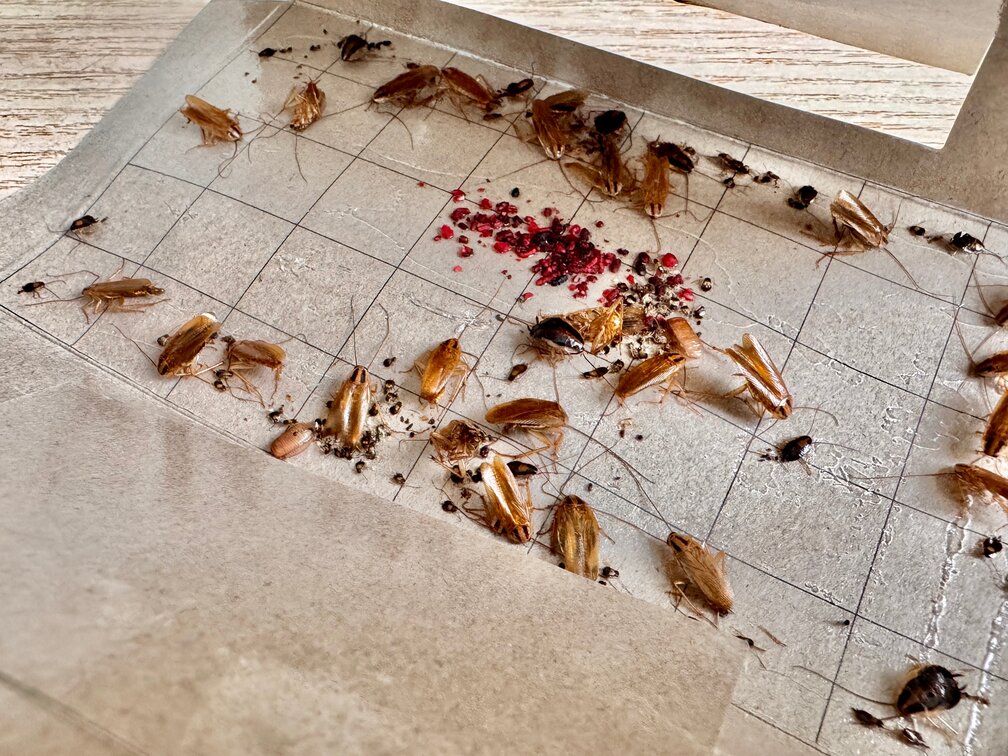
The German cockroach (Blattella germanica) is one of the fastest breeding cockroaches in the world and is a common pest in the UK. Despite its name, it didn’t originate in Germany, the most likely source points towards Southeast Asia, its arrival in the UK possibly occurred around the time of the Crimean war. German cockroaches are commonly associated with warm humid environments where a food source is readily available with the first port of call being kitchens.
Infested domestic properties then commonly lead to the infestation of adjacent properties or places of work like restaurants, food-processing facilities, hospitals and hotels. Their small size and ability to get into almost anything makes them easy to transfer from their source to other buildings via transported goods and property.
They’re relatively small compared to other cockroach species found in the UK, being roughly the size of a honeybee. Their body is flattened and oval, a classic shape for a crack and crevice dwelling insect. They will generally harbour away from light and aggregate like other cockroach species, harbourages will contain both adults and nymphs. One of the most common harbourages in a domestic setting is behind a fridge by the motor or under the sink, from there, there are no limits as to where they can live.
Adult insects are winged and are light brown / golden in colour, with two black stripes running lengthwise on the pronotum.
Differences between the sexes is difficult to determine as they are very similar, males are normally more slender than females with slightly longer wings, a cockroach with an ootheca projecting from the rear is easy to identify obviously. All stages have long whip like antenna and have cerci extending rearward from the abdomen. Nymphs are much darker than adults with early-stage nymphs being almost black with a pale / yellowish central mid-section to the body, later stage nymphs become progressively lighter with the two black stripes running full length of the body. Freshly moulted nymphs look albino in appearance but soon develop their coloration. There are normally 5-7 nymphal instars taking around 3 months to reach adulthood, the adults live for around 4-6 months. Female cockroaches produce ootheca that contain up to 40 eggs, eggs mature into nymphs within the ootheca which is carried by the female for around a month until a few hours before hatching. Finding a deposited ootheca that hasn’t already hatched is there-for rare, but a good find non the less. Just don’t take it home with you!
Individual females can produce up to 8 ootheca in their lifetime resulting in over 200 offspring, if they all breed successfully the next generation goes into the tens of thousands. In normal conditions, natural mortality reduces these numbers, but the potential for exponential growth remains enormous. In warm, humid apartments with an abundant food source, populations can increase from a few individuals to thousands very quickly.
I used to carry out block treatments in the early 90’s in London and some of the sights and sheer number of insects an infested flat could support were incredible. In those days there were no gels, so control was all spraying and dusting, entering flats wearing full PPE!
Technicians would emerge from some flats covered in cockroaches as a result of the flushing effect of the treatment just carried out, this doesn’t happen with the modern gels making treatment easier and far less traumatic in almost every situation.
If you are forced to use a pyrethroid spray to tackle an infestation of cockroaches timing is crucial, don’t do it just before the restaurant opens to the public if you want to keep your contract!!
As many infestations are found in kitchens using a spray treatment has to be done carefully so as not to contaminate food or food prep surfaces let alone cutlery, pots and pans, plates and everything else for that matter. Nowadays with the modern gels available treatment can take place when the kitchen is in full swing (subject to RAMS) so no more late-night spray treatments after the kitchen has closed. I have always found a combination of spraying and gelling to be the best formula for treating German cockroaches regardless of size and extent of infestation. A good tip is to make sure pots, pans and bowls are stored upside down after any treatment, so no one gets added unwanted protein in their soup..
Always consider where they have come from though, its very important as they don’t fly in. I’ve only ever seen Brown banded and Australian cockroaches fly in the UK so they must have been brought in somehow. More times than not its via staff working on site so trap the changing and staff rooms. It could be goods brought onto site or cross infestation from the neighbouring property, very common in blocks of flats, shopping centres and the like, so use plenty of monitors to detect early signs of activity. When you get signs of them being about flood the area with even more traps as they can lead you to the source.
If you’re gelling and area and you can’t locate harbourages use an aerosol to flush them out, classic harbourages are in and around “white goods”, cupboards, under and behind sinks, behind tiles, behind water pipes, door frames, the list can be extensive.
Numbers had dropped of in the past but evidence shows that they are on the increase again, resistance to pyrethroid insecticides is a common occurrence so vary your insecticides accordingly.