Case Study: Selontra® outcompetes established food source to eliminate major rat infestation
Brendan Ryan shares his experience using Selontra® to tackle a severe rat infestation at a national museum with thousands of visitors each day.
- High infestation: More than 50 rats present around a busy waste compound
- Previous baiting programme had failed, with no recorded bait take
- Proven palatability: Complete uptake despite the presence of abundant food waste
- Approximately 2.5kg of Selontra® used
- Just Three site visits required

About the Pest Technician
Brendan Ryan joined the pest control industry in 1995 as an apprentice with Rentokil before establishing his own business just two years later. Over the following decade, the company grew into a nationwide service provider headquartered in Dublin.
Recognising the importance of continuous learning, Brendan invested heavily in training both in Ireland and abroad, developing a strong culture of ongoing professional development for himself and his team. Today, as Managing Director of Pest Eradico, he combines more than 30 years of practical experience with a commitment to delivering effective and environmentally responsible pest management solutions.
A Major Rat Problem at a National Museum
Brendan was called to a national museum site with a significant food operation and thousands of daily visitors. The site’s bin compound was the main site of the infestation and was located around 200 yards from the kitchens.
Daily rat sightings had been reported to the previous pest control provider, whose records showed no bait take from six external bait stations. When Brendan attended the site, he quickly realised the extent of the problem.
“Within minutes of arriving, we witnessed rats moving to and from the bins every 30 seconds or so,” Brendan explained. “The rats were moving calmly rather than hurriedly, which told us they had established the area as their own.”
Rats of various ages were observed, indicating a breeding population, and Brendan estimated that there were more than 50 rats on site.
An Integrated Approach
Rats had established shelter beneath containers and in burrows around the compound, while food waste leaking through open drainage holes in the wheelie bins provided a constant source of food.
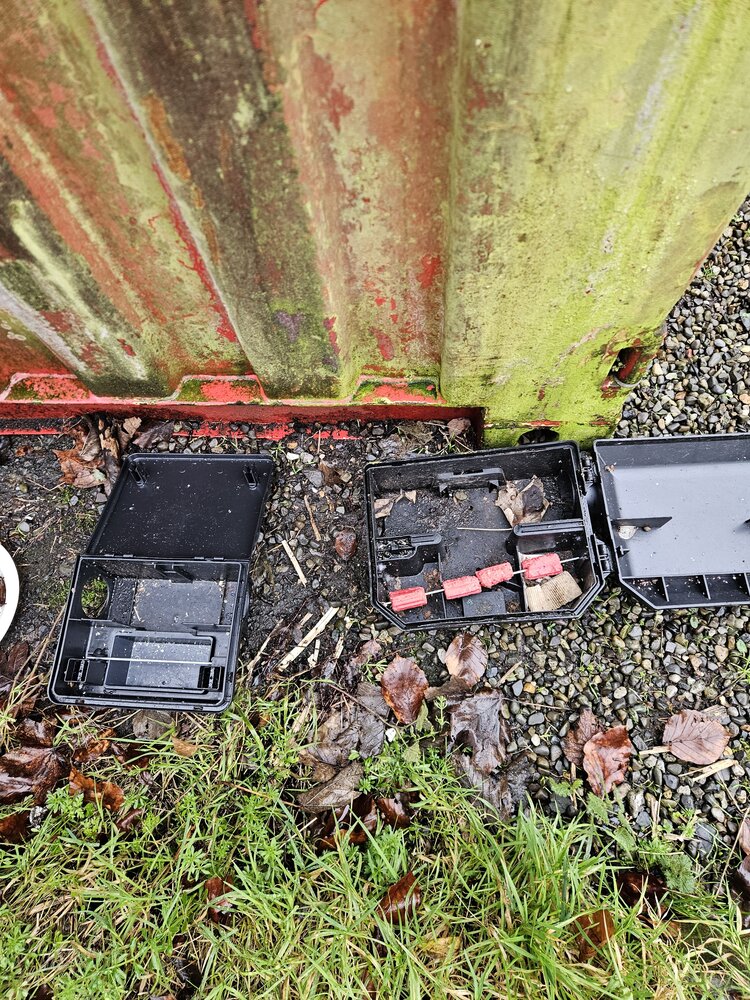
Inspection of the existing bait stations revealed untouched bait, despite the significant rodent activity.
“Once rats have established a reliable food source, they are considerably less likely to enter bait stations,” said Brendan. “It was clear that baiting alone had not solved the issue and that an integrated approach would be needed.”
Recommendations were made to improve waste management and hygiene practices, including cleaning food residues, replacing missing drainage bungs and temporarily relocating the bins to disrupt established feeding patterns. Vegetation management around the area was also advised to make the habitat less attractive to rodents.
Why Selontra®?
Brendan selected Selontra® for two key reasons.
“Firstly, we believe cholecalciferol helps mitigate the risk of secondary poisoning to birds of prey associated with second-generation anticoagulant rodenticides,” he said. “We had already been using Selontra® for almost a year and had achieved excellent results.”
“Secondly, after seeing uneaten bait in the previous contractor’s stations, we knew we needed a product with exceptional palatability.”
Nine tamper-resistant PVC bait stations were installed at ten-yard intervals alongside the commercial wheelie bins, each containing seven Selontra® blocks.
Exceptional Bait Uptake
Brendan had recommended that the wheelie bins be moved and food residues removed to interrupt established feeding patterns and encourage bait acceptance. However, when he returned ten days later, these measures had not yet been implemented.
Despite the continued presence of food waste, all 1.26kg of Selontra® had been consumed.
“We felt we needed to interrupt their established behaviour if we were to get them feeding on our bait,” Brendan explained. “As it turned out, the bins had neither been moved nor the drainage holes sealed, yet every block of Selontra® had been consumed.”
“What was particularly striking was that the bait left behind in the previous company’s bait stations remained untouched. The logical conclusion for us was that Selontra® was at least as palatable as the available food residues, if not more so.”
Approximately 1kg of fresh bait was applied during the second visit.
Rapid Control
By the third and final visit, bait consumption had reduced to approximately 0.2kg and no further signs of rat activity were present, indicating that the infestation had been successfully controlled.
Across the three visits, approximately 2.5kg of Selontra® was used.
Brendan said:
“One of the most interesting aspects of this case was that one of our recommendations proved unnecessary. We had advised moving the wheelie bins and removing food residues, but neither action had been carried out and the rats still exhausted every trace of Selontra® despite having an established food source.”
“In the same circumstances, we would always make those recommendations again because habitat management remains an essential part of integrated pest management. However, you can’t escape the fact that the palatability of Selontra® trumped food waste.”
“Combined with the environmental benefits of cholecalciferol and the reduced risk of secondary poisoning to birds of prey, it makes Selontra® a valuable tool for tackling large and well-established infestations.”
To find out more about Selontra®, or to browse the full range of pest control products, visit the BASF Pest Control Solutions website: https://www.pestcontrol.basf.co.uk/en/Products/Overview/Rodenticides/