From The Pest Control Library
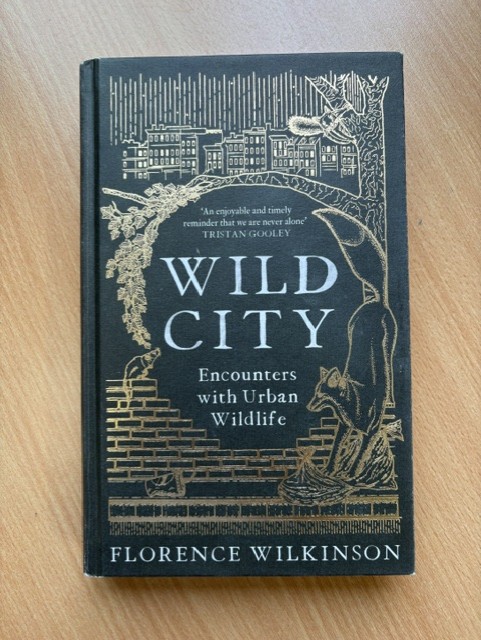
WILD CITY – Encounters with Urban Wildlife
By Florence Wilkinson
“An animal doesn’t become a pest simply because of what it is. Very often, it’s where it is, how many there are and how we choose to live alongside it.”
When does wildlife become a pest?
For those of us working in pest management, it sounds like a fairly simple question. In reality, the answer often has less to do with the animal itself and more to do with where it happens to be.
A fox crossing a field is wildlife. A fox regularly turning over bins in a residential development is suddenly a problem. Pigeons wheeling above a town square may be part of the urban landscape, but when they begin roosting on a building, fouling entrances and blocking gutters, somebody usually calls a pest controller.
Florence Wilkinson’s Wild City: Encounters with Urban Wildlife looks at the remarkable variety of animals that have learned to live alongside us in our towns and cities. It isn’t a pest control book, but it explores a subject that should be very familiar to anyone working in our profession: what happens when the human and animal worlds occupy the same space.
What’s in the book?
Wild City takes us into the wildlife living among our houses, streets, parks and buildings, often much closer than we realise.
Wilkinson explores our encounters with urban animals and looks at how different species have adapted remarkably well to environments that were built primarily for people.
What makes the book particularly interesting is that it doesn’t treat the city as somewhere nature has been pushed out of. Quite the opposite. Our towns have developed their own ecosystems, providing food, shelter, warmth and nesting opportunities for species capable of exploiting them.
Once you start looking at a city this way, buildings stop being simply buildings. Roofs become nesting sites, ledges become substitutes for cliffs, drainage systems provide routes through the urban environment and discarded food creates an enormous artificial food supply.
To a pest professional, quite a lot of that will sound familiar.
Sharing our cities
One of the interesting themes running through Wild City is our complicated relationship with the animals living around us.
We actively encourage some species. We put out bird feeders, create wildlife gardens and celebrate seeing certain animals in our neighbourhoods. Others receive a rather less enthusiastic welcome.
The distinction isn’t always particularly logical.
Much depends on numbers, location and behaviour. A few birds can be enjoyed. Hundreds roosting on a building can create a serious problem. An animal that causes no concern in a park may become unacceptable when it moves into somebody’s roof space.
This is where the book becomes particularly relevant to pest management.
Professional pest control increasingly isn’t simply about removing an unwanted animal. We need to understand why it is there in the first place. What food is available? Where is it sheltering? What feature of the building is being exploited? What has changed in the surrounding environment?
In other words, good pest management requires us to understand the urban ecosystem too.
The city through different eyes
Perhaps the nicest thing about Wild City is that it encourages you to look at familiar surroundings differently.
Walk through almost any town centre and there is another city operating alongside ours. Birds are exploiting architectural features originally designed for entirely different purposes. Mammals move through gardens, railway corridors and patches of undeveloped land. Insects make use of tiny habitats most of us simply walk past.
For pest controllers, we probably notice more of this than most people anyway. Our job trains us to look for droppings, entry points, harbourage, food sources and the subtle signs that something else has been using a building.
This book encourages us to take that observation a little further.
There is also a useful reminder here that an animal being inconvenient doesn’t make it inherently bad. Many of the species we deal with are simply extremely successful at adapting to the environment humans have created for them.
Understanding that doesn’t mean ignoring genuine pest problems. Public health, food safety, property protection and animal welfare still matter. But understanding why an animal is there usually gives us a much better chance of finding a lasting solution.
And that, perhaps unintentionally, makes Wild City rather relevant to modern pest management.
Library Verdict
Recommended for: Pest management professionals, wildlife enthusiasts, surveyors and anyone interested in the relationship between people, animals and the urban environment.
Verdict: Wild City isn’t a technical pest control book and doesn’t pretend to be. Its value lies in making us look again at the environment in which much of our work takes place. Engaging, accessible and thought provoking, it is a reminder that our towns and cities belong to far more species than just us.