Know your Foe
The European Robin (Erithacus rubecula)
Mark Wenman, NPTA Technical Manager
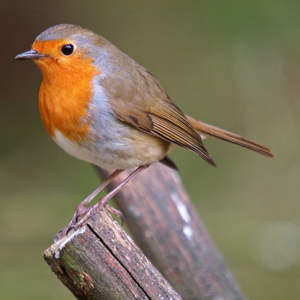
The robin is one of the most recognisable and well-loved birds in the UK. Its orange-red breast, upright posture and habit of following us around the garden have made it a familiar sight in gardens, parks and around buildings.
The robin is not considered a pest species, being protected under the Wildlife and Countryside Act 1981. Their inquisitive nature and preference for low, sheltered nesting sites means that we will occasionally encounter them during surveys, or IPM visits.
Identification and biology
The European robin (Erithacus rubecula) is a small passerine bird, approximately 12–14 cm in length, with a wingspan of around 20–22 cm.
The adults are easily recognised by their distinctive orange-red breast and face, which contrasts with their olive-brown upperparts and pale underside. Young birds lack the orange breast and are generally brown with pale spotting, making them less immediately recognisable.
Robins are found throughout the UK and are commonly associated with woodland, hedgerows, gardens and parks. They are highly territorial, particularly during the breeding season, and will aggressively defend their territory against other robins.
Unlike some garden birds, robins are often relatively comfortable around people and therefore may take advantage of human activity to locate food.
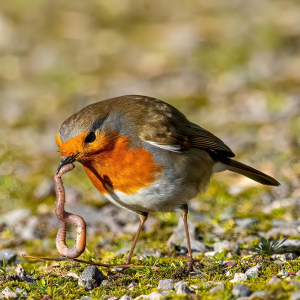
Robins are omnivorous birds that primarily eat insects, spiders, worms, and berries, but they also enjoy mealworms, suet, and sunflower hearts. Their diet changes seasonally, preferring protein in spring and summer for breeding and raising chicks. Berries, seeds and fruit in the autumn and winter provide the energy to survive the colder months.
Life cycle
Robins can begin breeding surprisingly early in the year, with nesting activity potentially starting from March and continuing into the summer.
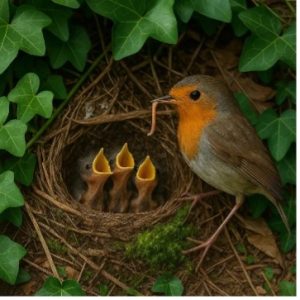
The female usually builds the nest, using materials such as moss, leaves, grass and hair. Nests are often placed in sheltered locations close to the ground, including holes, banks, sheds, garages, climbing plants and other concealed areas around buildings.
A typical clutch contains around 4–6 eggs. The eggs are incubated by the female for approximately two weeks, with the young remaining in the nest for roughly another two weeks before fledging.
Robins can raise more than one brood during the breeding season, meaning that nesting activity can continue for several months.
Correct identification
Robins are a good example of why correct bird identification and an understanding of legislation are essential parts of professional pest management.
A customer may see a bird entering a building and immediately request its removal. We should first establish why the bird is there, how the bird is entering and whether nesting is taking place.
Management
Where there is a genuine risk from the robins activity, the most appropriate approach is usually prevention and exclusion rather than attempting to manage the birds themselves.
Before undertaking proofing, the building should be surveyed carefully to identify entry points and determine whether birds are currently nesting.
Where an active nest is discovered or strongly suspected, work should be postponed where necessary until it is no longer in use. Once the risk has passed, suitable proofing measures can be introduced to prevent the same problem occurring again.
Primary prevention is door management or the introduction of a secondary barrier such as door and window screening, even the fitting of a rapid action door. Proofing of large gaps in the building structure may be needed.
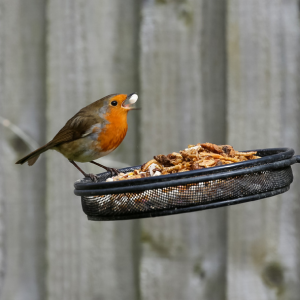
Removal of easily accessible food sources and spillages is very important to prevent attracting in this species and then their habituation to an area.
Significance as a pest and the law
Robin droppings, and birds entering a property can present a real risk of contamination. Food sites, both manufacturing, distribution and sales can be most at risk. This could pose a serious contravention under the Food Safety Act 1990
As mentioned, the robin, its active nest and eggs are fully protected in the UK and throughout Europe. It has never been included in bird General licences. If a robin is suspected or proven to be nesting, no management can proceed.
There are options for non-lethal removal of an established, non nesting robin under licence, should exclusion and deterrence not be effective.
Non lethal live trapping and release is effective, and I have used this successfully, under licence. Meal worm larvae or another suitable food, with a water source can be placed within the trap and this can be placed in a securely managed, ambient location internally.
Robins are strongly territorial and the song of the robin is not simply a lovely garden sound. This is used to advertise territory and warn other robins away. This territorial call can be played close to the trap and even before this to lure the robin out of the area.
Robins repeatedly attacking their own reflection in windows. I have placed small mirrors in a trap, or again to lure them away from a site, outside of breeding season. Confirm that this is permitted within the relevant licence.
The law varies on how we obtain the right to proceed with non-lethal trap and release depending on where we are based in the UK. This is a brief overview and please fully read and follow the relevant licence, or contact us for the full information:
England – For a fully food-based business, robins are included on the Class licence CL03.
Wales – For a fully food- based business, robins are included on the General Licence 16.
Scotland – You must contact Nature Scot’s licencing team to request an individual licence.
Northern Ireland- You must contact DAERA’s wildlife management team to request an individual temporary permit.
In conclusion
As with many bird related enquiries, the key to dealing with a robin is understanding why it is there, whether intervention is lawful, and how the building can be managed to prevent future problems.