Know your Foe
Edible Door Mouse
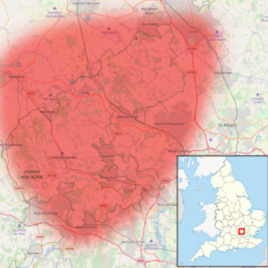
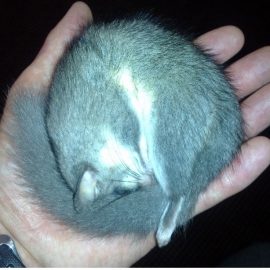
The Glis glis, or edible dormouse, is a small ( around 140g) mainly nocturnal rodent generally native to continental Europe but has also established itself in parts of southern England after escaping from captivity in the early 20th century, the area of the UK they can be found in is known as the “Tring Triangle”, an area of the UK bordering the M25/M40 and M1 extending out as far as Leighton Buzzard. Anyone living within this area of the UK can expect to be visited by one of these rodents most likely in the dead of night. There have been reports of Glis outside this area so don’t be surprised if one day you see one. Size-wise, think of a cross between a chipmunk and a squirrel in size.
Control of the Glis glis
Being non-indigenous it can’t be released after being caught and has to be humanely dispatched. Killing Glis is “authorised” by Natural England via the use of the governments licencing scheme which in effect legalises its control.
The licence issued by Natural England is the WML-CL02 which allows the lethal control of the species to preserve public health and safety as well to prevent damage to crops and timber amongst other things. To use the licence you have to register with NE and await confirmation before commencing any control, certain types of spring traps are allowed as well as live capture traps, both of which have to be checked daily; at the end of the “season” a reporting procedure completes the process, and the licence is then closed down. As the traps have to be checked daily the control of “Glis” can become expensive for those unfortunate enough to be visited by them. I have met people who have suffered mental health issues due to the noise and commotion caused by these creatures living in their houses. Whole housing estates can be affected by these creatures as they go about their mischievous lives.
Surprisingly for a rodent they can live for several years with reports of captive ones living over 10 years or more. I guess when you consider they hibernate for half of their lives it isn’t that surprising really. Evidence of Glis (other than actual sightings) is normally the noise created (generally in the loft) as a result of their antics, ripped up insulation, gnawed beams and wiring, droppings which are similar to small rat droppings and the smell of rodents.
Lifecycle
The lifecycle of Glis glis includes a long period of hibernation each year, typically between October and late May / June, thus spending over half the year in a torpid state relying entirely on fat reserves accumulated in late summer and autumn. Their survival strategy is highly energy-efficient, with body temperature and metabolic rate dropping dramatically during the hibernatory period.
Emergence from hibernation coincides with warmer temperatures and increasing food availability. Dormice feed on a varied diet including seeds, fruits, flowers, and occasionally insects. In the UK, they show a strong preference for beech mast, which plays a crucial role in reproductive success. Interestingly, Glis glis exhibits what is known as “mast-dependent reproduction.” In years when food is scarce, particularly when tree seed production is low, breeding may be reduced or skipped entirely.
I have been involved in trapping Glis and have often used sliced apples as a bait for traps, saying that anything goes really.
The breeding season typically occurs in early summer, shortly after emergence from hibernation. After mating, females undergo a gestation period of around 30 days, giving birth to litters usually consisting of 4–6 young, sometimes several more. The offspring are altricial at birth—blind, hairless, and entirely dependent on the mother. Rapid development follows, and juveniles are weaned after approximately four weeks. They must quickly gain weight before the next hibernation period, making late summer feeding critical for survival.
By late summer and early autumn, both adults and juveniles enter a phase of hyperphagia, consuming large amounts of food to build fat reserves. This period is essential, as insufficient fat accumulation can result in mortality during hibernation. After this feeding phase, dormice retreat to underground burrows or sheltered locations such as lofts to begin the hibernation cycle again, thus completing their annual lifecycle.
In summary, Glis glis—known for their extended periods of hibernation, food-dependent reproduction, and rapid seasonal activity are a major problem for those who live in their ever-growing territory. Natural England’s licensing system exists to monitor numbers caught and geographic locations.