Herefordshire Pest Trends Revealed: Rodents Top the 2025 Activity List
New data from the Herefordshire Pest Activity Data Analysis Report 2025 offers a detailed look at pest pressures across the county throughout last year.
The analysis, based on confirmed inspections and treatments carried out by trained technicians across Herefordshire, highlights a clear picture of the pests affecting homes and businesses — with rodents dominating activity in a way that sets 2025 apart from previous seasons.
Rodents: A Year-Round Challenge
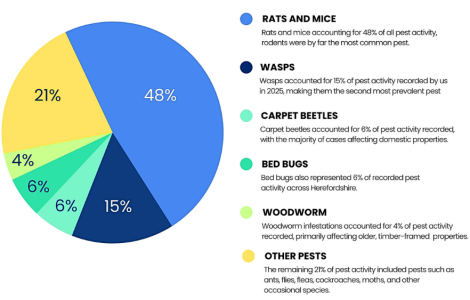
Rodents, specifically rats and mice, made up nearly half (48%) of all recorded pest activity in Herefordshire during 2025, significantly outpacing other pest groups.
Unlike traditional seasonal patterns, rodent pressure was reported as consistent throughout the year, rather than peaking only during colder months. Milder winters, plentiful food sources and easier access to buildings are all thought to be contributing factors.
Technicians also noted increasing rodent activity across both urban and rural properties, reinforcing the message that rodents should no longer be viewed as only a winter problem.
Secondary Pests: Wasps and Insects
After rodents, wasps accounted for 15% of pest activity, making them the second most commonly treated issue in the county. Warm seasonal conditions contributed to high wasp numbers, with nests frequently found in roof spaces, wall cavities and sheds.
Several insect pests also featured prominently:
- Carpet beetles (6%) – Often discovered after damage to fabrics or furnishings, with modern centrally heated homes supporting year-round development.
- Bed bugs (6%) – Commonly associated with travel and second-hand furniture, and still challenging to detect in early stages.
- Woodworm (4%) – Primarily affecting older and timber-framed buildings, with untreated infestations posing a risk of structural damage.
The remaining 21% of activity included ants, flies, fleas, cockroaches, moths and other occasional species, many of which present hygiene or contamination risks if left unmanaged.
What the Data Suggests for 2026
The findings indicate a move toward less predictable seasonality and more persistent pest pressure throughout the year. This reflects wider national observations that many pest species are remaining active for longer periods.
The key takeaway is the importance of early intervention. Acting quickly at the first signs of pest activity can prevent small issues from escalating into larger, more costly infestations.
Read the full article HERE
https://www.pgmpestcontrol.co.uk/post/herefordshire-pest-activity-data-analysis-2025